Why Transformation Programmes Fail Before They Begin
Why Transformation Programmes Fail Before They Begin
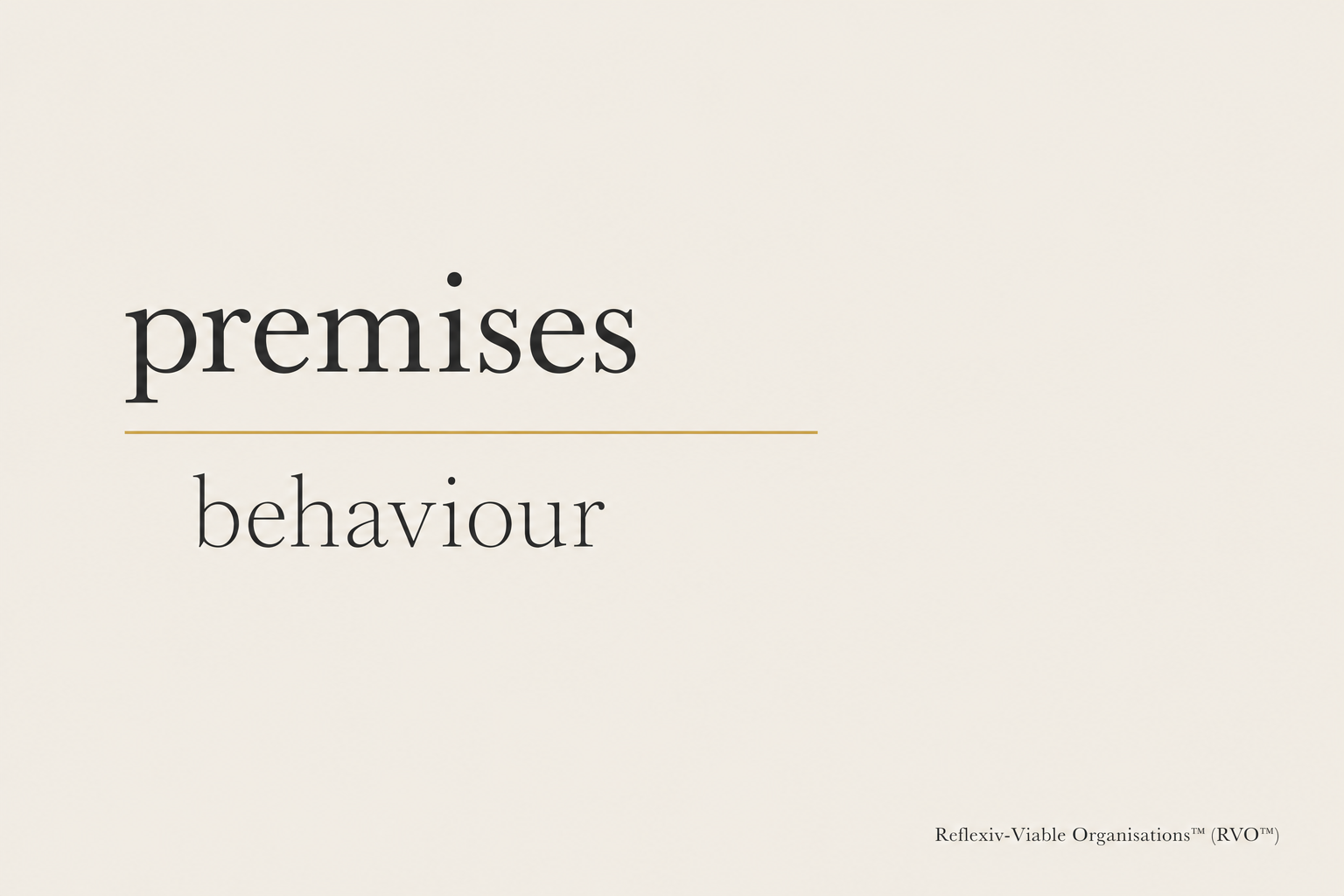
Organisations revise or optimise processes, structures, and roles. What they do not revise are the premises from which decisions about how an organisation should function follow. This distinction determines whether aimed transformation produces something new or produces the same thing in different clothing.
Transformation programmes fail, or cannot sustain whatever effects they initially produce, not primarily because the methods are wrong - though some are - and not because employees resist change. They do not produce the hoped-for effects because the premises that generated the old behaviour remain intact while the behaviour itself is being tried to be changed. An organisation operating on the premise that value is individually attributable will assimilate a new team structure or any methodology with best aim so that individual attribution still happens. The structure changes. The premise does not.
(This is also why change in organisations so often has the character of repetition: the same dysfunction, a different label.) Argyris called it defensive routines: the first attempts at double-loop learning end as gimmicks - apparently new behaviour that serves the old values. The form changes. The premise does not.
Viability does not depend on whether an organisation adopts the right practices. It depends on whether an organisation is structurally capable of observing the premises from which its practices follow - and revising them when the environment demands it. That capacity is not cultural, and it cannot be produced by a leadership programme or a value statement. It is structural capacity: it requires that decision authority, feedback, and accountability are arranged so that premise-threatening signals can reach the level where premises are set.
The management literature on organisational change is dominated by accounts of cultural resistance, leadership failures, and insufficient commitment. These accounts are not wrong as these phenomena occur. But they offer explanations at the wrong level. They describe symptoms of a deeper structural problem: the existing decision premises of an organisation are more powerful than any cultural initiative designed to override them.
Premises govern behaviour. Not intentions. If a transformation programme announces new values and new leadership expectations while leaving the incentive architecture, the decision rights, and the reporting structures unchanged, the organisation has not changed. It has placed a layer of articulated aspiration over unchanged structural determinants of behaviour. The structural determinants win because they are rational. They respond to the actual incentive structure, not the aspirational one.
What would it mean, then, to take this seriously as a design problem rather than a change management problem? It would mean that the first question in any transformation is not: how do we get people to behave differently? It is: which premises need to change first, in what sequence, so that the system becomes capable of revising the rest itself?
That question is harder and slower. It is also the one that produces something different from what already exists.