Welcome to our resources page, where we share insights and expertise in organisational adaptiveness, agility, lean, leadership practices, digital transformation, and, more generally, the evolution of work practices. Discover practical strategies, proven frameworks, and innovative approaches to help your organisation thrive in today’s dynamic business environment.
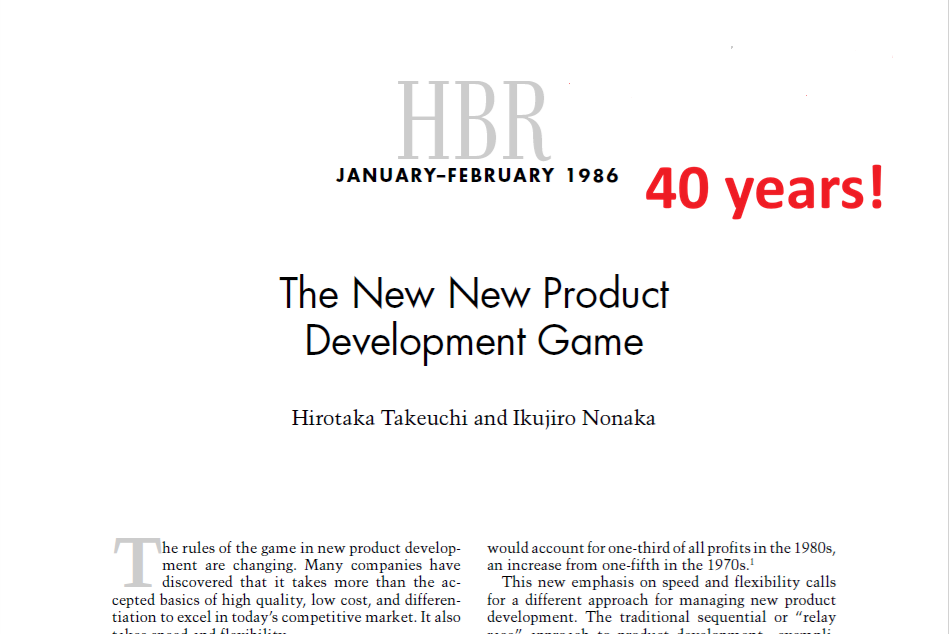
In January 1986, two Japanese professors published an article that would reshape how the world thinks about innovation. Not through a grand theory, but through a rugby metaphor. Hirotaka Takeuchi and Ikujiro Nonaka had spent years studying how the most competitive companies in Japan and the United States actually developed new products. What they found contradicted everything the management world assumed.
Joint certification prepares professionals to implement effective product development with Scrum teams (one team), beyond rituals and mechanics, while building awareness for multi-team collaboration.
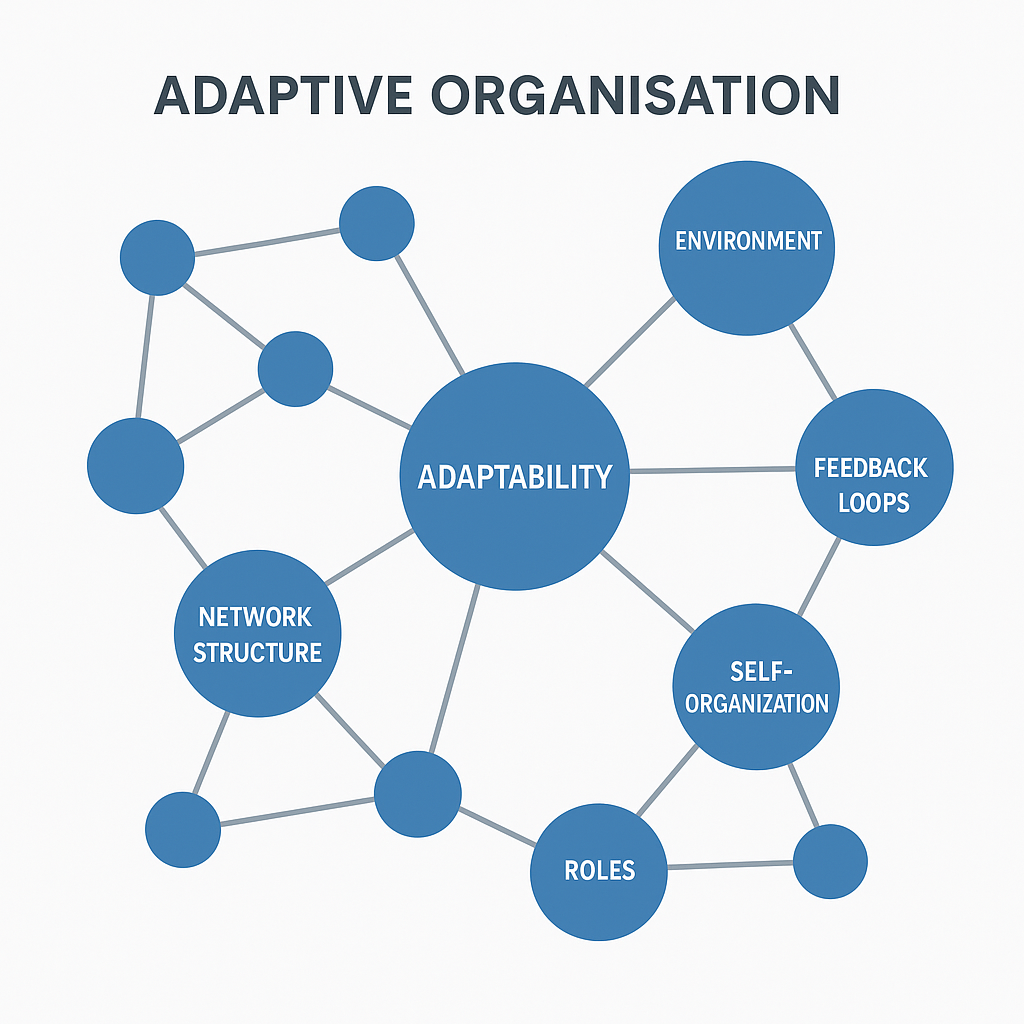
An adaptive organisation is defined by its ability to make effective, decentralised decisions, learn continuously, and align today’s actions with future opportunities under conditions of uncertainty. It relies on self-organisation, outcome-focused measurement, and leadership as an ongoing learning practice rather than rigid structures or control. Overall, adaptivity emerges from designing decision-making, collaboration, and learning to navigate complexity and enable continuous change.
By: Ilker Demirel
Published:
Adaptive OrganisationsLeadership & Organisational DevelopmentComplexity & Systems Thinking
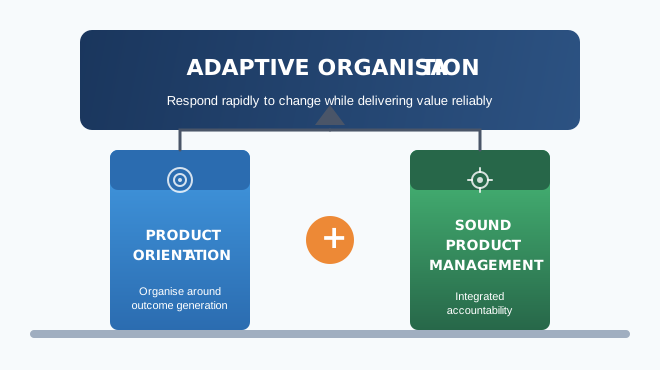
Organisations today face a paradox: they must deliver value reliably today whilst simultaneously preparing for an uncertain tomorrow. This article explores why sound product management, combined with the structural shift to product orientation, is essential for building truly adaptive organisations. Learn how product management creates coherence, enables fast learning, and provides the strategic discipline needed to thrive in dynamic markets.
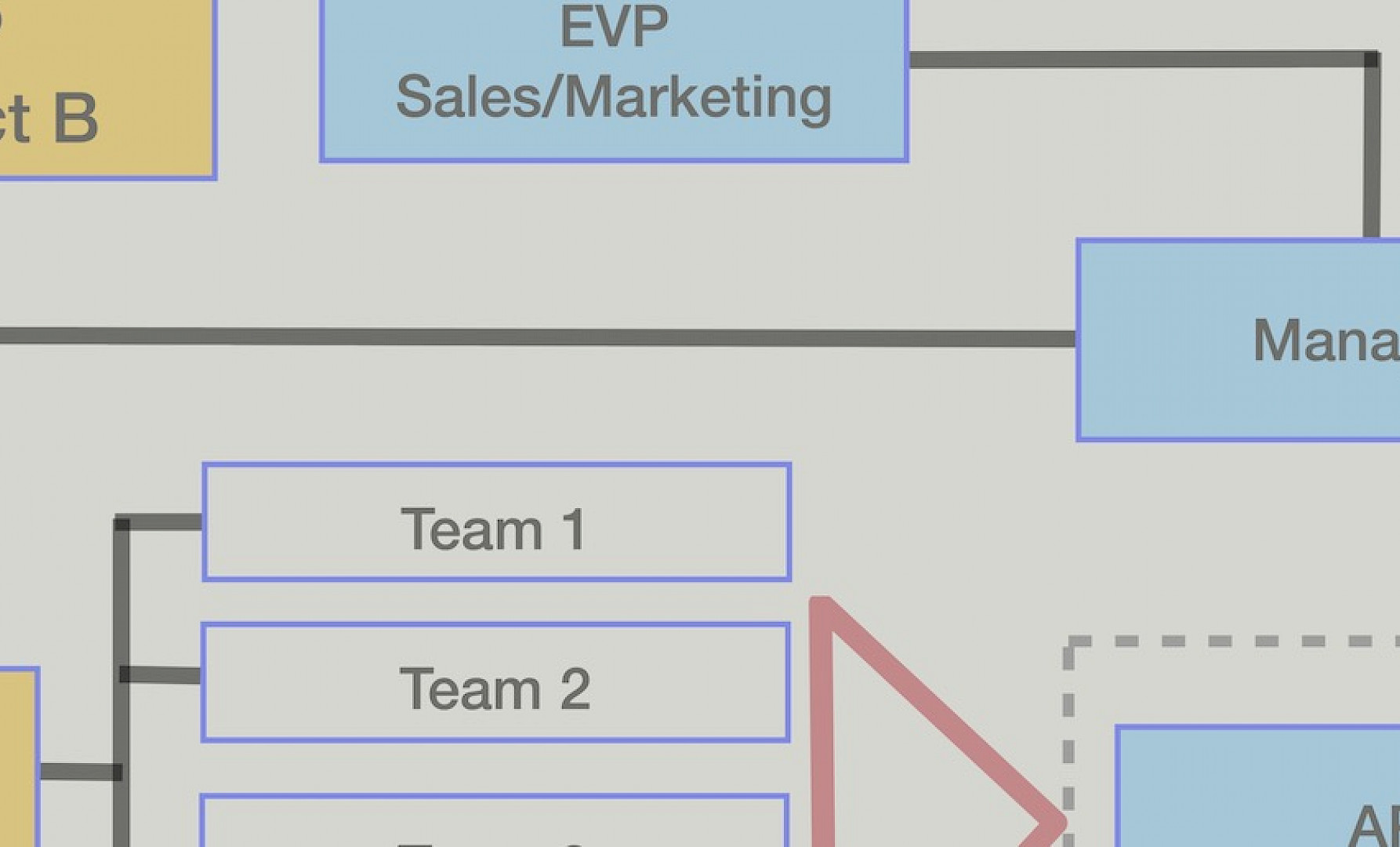
Matrix organisation has well-known problems. Combining Back-Front and Modular organisation designs gives you options for creating adaptive organisation, productive teamwork, and market focus.
In times of AI and remote work, the question arises whether traditional teams are becoming obsolete. This article examines the importance of teams in the Agile Manifesto, new concepts like AI pairing and dynamic teaming, and their future: teamwork remains essential but is fundamentally transforming.
By: Andreas Schliep
Published:
Adaptive organisationsAgile PrinciplesTeamsAI in Collaboration
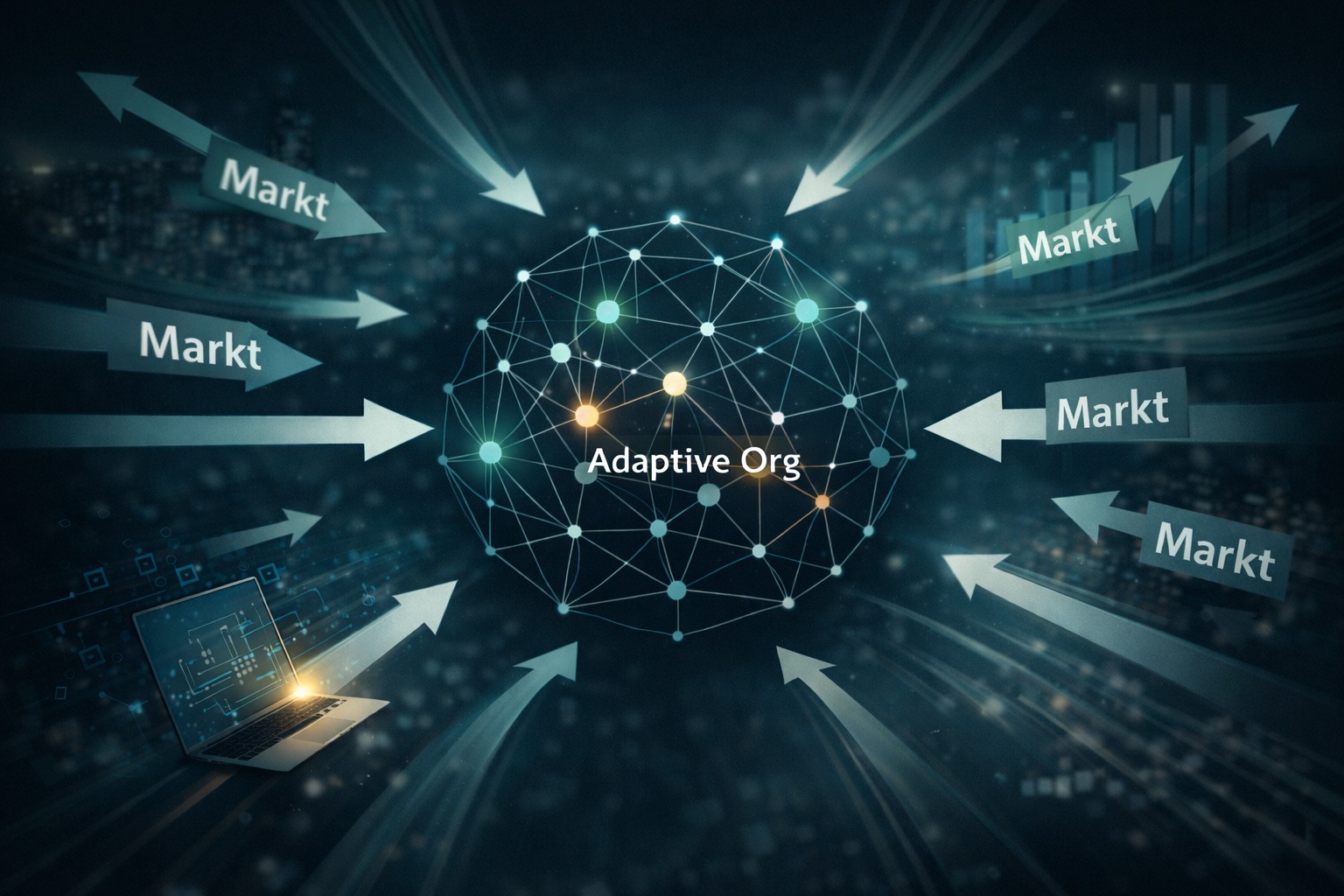
This whitepaper examines how organisations can develop genuine adaptability in rapidly changing markets. Traditional functional structures fail when confronted by agile competitors. We identify three essential pillars: product orientation (organising around complete value streams), fast learning cycles (feedback loops measured in days, not quarters), and organisational ambidexterity (exploiting current capabilities whilst exploring new opportunities). Underpinning these is adaptive leadership that enables rather than directs. Organisations that commit to this transformation do not merely survive disruption but create it, generating new markets rather than defending eroding positions.
The article examines the internal and external perspectives on the survivability of organisations. One possible external perspective is reflected in stock market trading data, while one possible internal perspective arises from the knowledge we have about the organisation to which we belong. Four metaphors representing organisations with varying degrees of adaptability provide a good starting point for discussion.