Willkommen auf unserem Fachartikel-Seite, wo wir Einblicke und Expertise in organisationaler Adaptivität, Agilität, Lean, Führungspraktiken, digitaler Transformation und allgemein der Evolution von Arbeitspraktiken teilen. Entdecken Sie praktische Strategien, bewährte Frameworks und innovative Ansätze, die Ihrer Organisation dabei helfen, in der heutigen dynamischen Geschäftsumgebung erfolgreich zu sein.
Leaders get AI wrong in two ways that look like leadership: handing the decision to IT, or ordering adoption from the top without understanding what AI can do. This first article of the series AI as a Leadership Responsibility explains why both failures are structural, and names five decisions that need a clear owner before AI agents are used at scale.
Von: Society for Adaptive Organisations
Veröffentlicht:
Adaptive OrganisationsArtificial IntelligenceAI as a Leadership ResponsibilityAdaptive Leadership
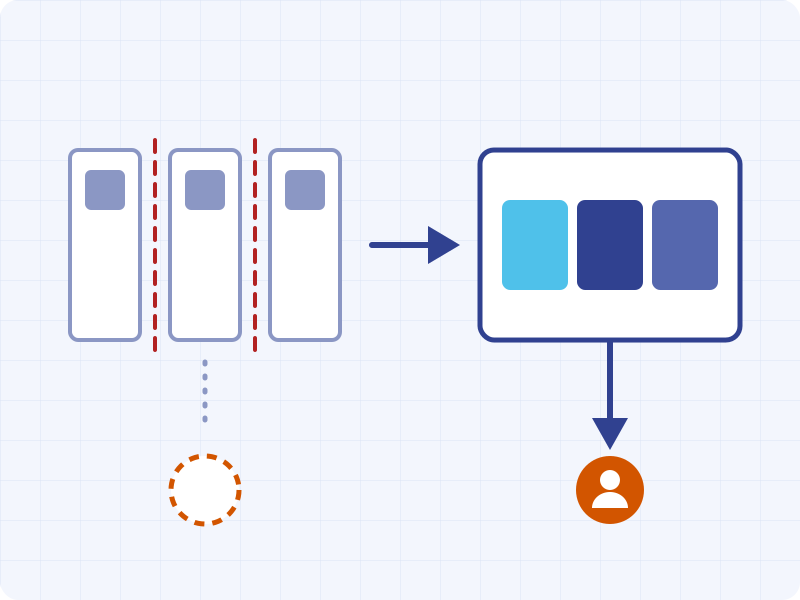
Ambidexterity gives organisations two hands, one to exploit the known and one to explore the new, but it misses the middle where most innovations actually die. This third article of the series on the dimensions of adaptivity introduces organisational multidexterity: explore, exact and exploit, held at once, with separate structures, protected investment and the courage to let go of what no longer serves.
Von: Society for Adaptive Organisations
Veröffentlicht:
Adaptive OrganisationsDimensions of AdaptivityAmbidexterityInnovation
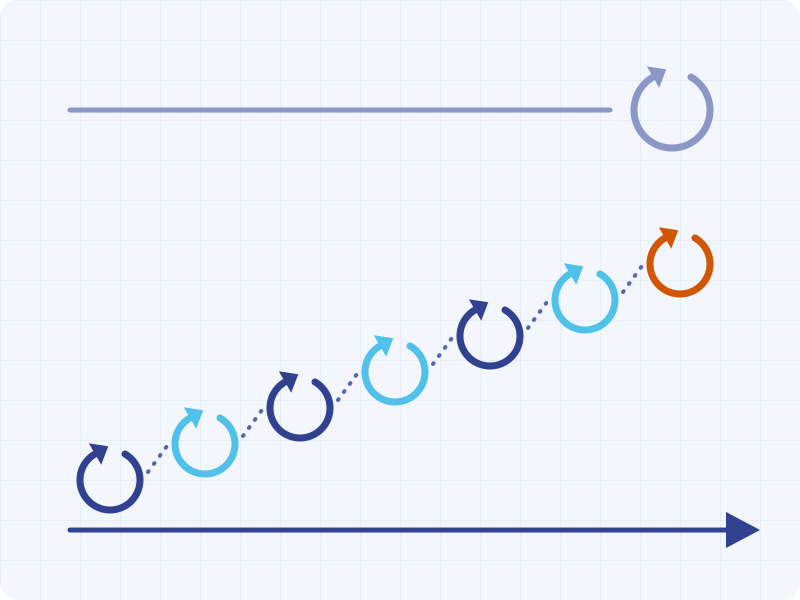
The distance between what an organisation assumes and what is actually true is its real measure of risk, and the speed at which it closes that gap is its rate of learning. This second article of the series on the dimensions of adaptivity explains why plans must be treated as hypotheses, why shortening the cycle is not working faster, and which structural, cultural and relational conditions must hold together for fast learning to compound.
Von: Society for Adaptive Organisations
Veröffentlicht:
Adaptive OrganisationsDimensions of AdaptivityFast Improvement CyclesLearning Organisation
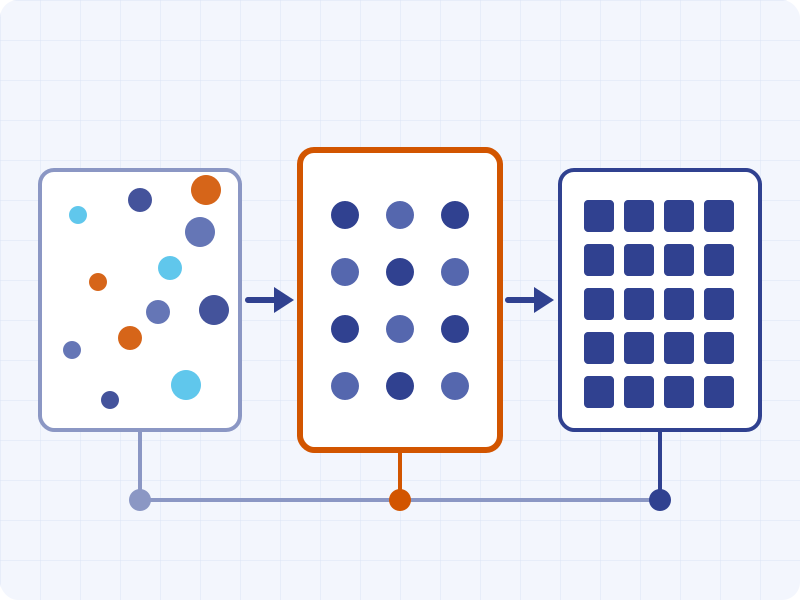
Most organisations are built like a food factory: structured around functions and components, with the customer's result stitched together across the boundaries between them. This first article of the series on the dimensions of adaptivity explains solution orientation, why component teams see no customer, what the shift to solution teams actually costs, and why cutting accidental complexity is a direct lever on speed.
Von: Society for Adaptive Organisations
Veröffentlicht:
Adaptive OrganisationsDimensions of AdaptivityProduct OrientationTeams
Every clause in the definition of an adaptive organisation is a load-bearing condition, and the only honest response to a specification is to test yourself against it. This second article of the series turns the definition into six checks, scored from one to five, worked from the foundations upwards — with a printable summary sheet and guidance on why the clauses that fail together tell you more than any average.
Von: Society for Adaptive Organisations
Veröffentlicht:
Adaptive OrganisationsDefinitionSelf-assessmentComplexity & Systems Thinking
The Society's definition of an adaptive organisation is not a slogan but a piece of engineering. Read closely, it is built in four layers — discipline, terrain, capabilities and foundations — each resting on the one below. This first article of the series on the definition shows why the sentence reads downwards but only works upwards, and why leadership is the load-bearing element the diagram leaves out.
Von: Society for Adaptive Organisations
Veröffentlicht:
Adaptive OrganisationsDefinitionComplexity & Systems ThinkingLeadership & Organisational Development
The organisations that will thrive with AI are not those that adopt the most tools fastest, but those that build the capacity to keep adapting. A more-than-half-century-old law from cybernetics explains why.
Die meisten Debatten über adaptive Organisationen stellen die falsche Frage. Adaptivität ist eine Momentaufnahme; Evolvierbarkeit — die strukturelle Fähigkeit, dauerhaft nützlichen Wandel zu erzeugen — ist der Film. Dieser Beitrag greift auf Ashbys Kybernetik, die biologische Evolvierbarkeitsforschung und das AME3-Framework zurück und zeigt, was diese Unterscheidung in der Praxis fordert.
Die meisten Transformationsvorhaben konzentrieren sich auf sichtbare Veränderungen, während die tieferliegende Logik der Organisation unangetastet bleibt. Nachhaltiger Wandel wird erst möglich, wenn Organisationen die Annahmen hinter ihren Entscheidungsprozessen hinterfragen und neu gestalten können.
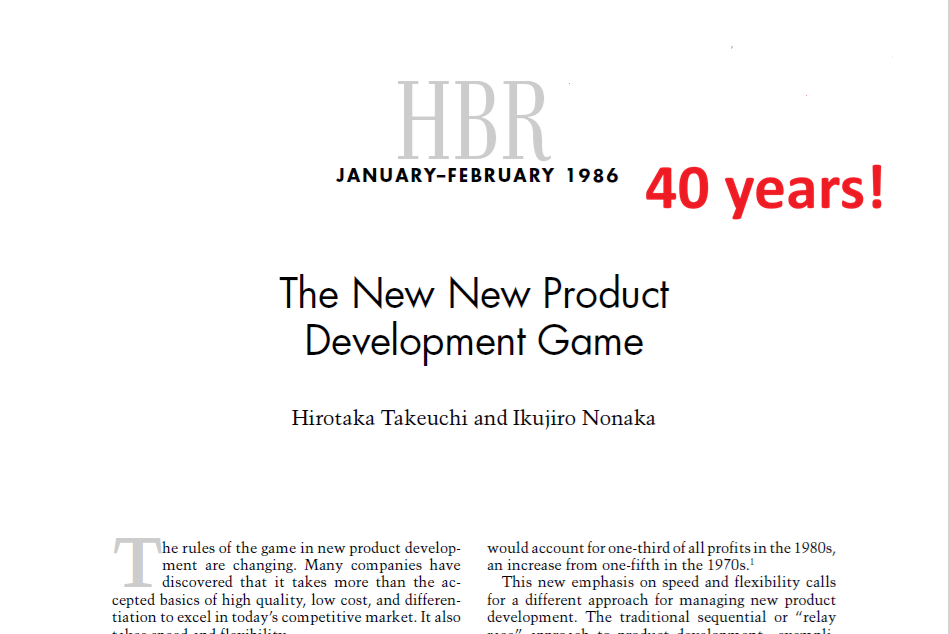
Im Januar 1986 veröffentlichten zwei japanische Professoren einen Artikel, der die Sichtweise der Welt auf Innovation grundlegend verändern sollte. Nicht durch eine große Theorie, sondern durch eine Rugby-Metapher. Hirotaka Takeuchi und Ikujiro Nonaka hatten Jahre damit verbracht, zu untersuchen, wie die wettbewerbsfähigsten Unternehmen in Japan und den USA tatsächlich neue Produkte entwickeln. Was sie herausfanden, widersprach der klassischen Managementtheorie.
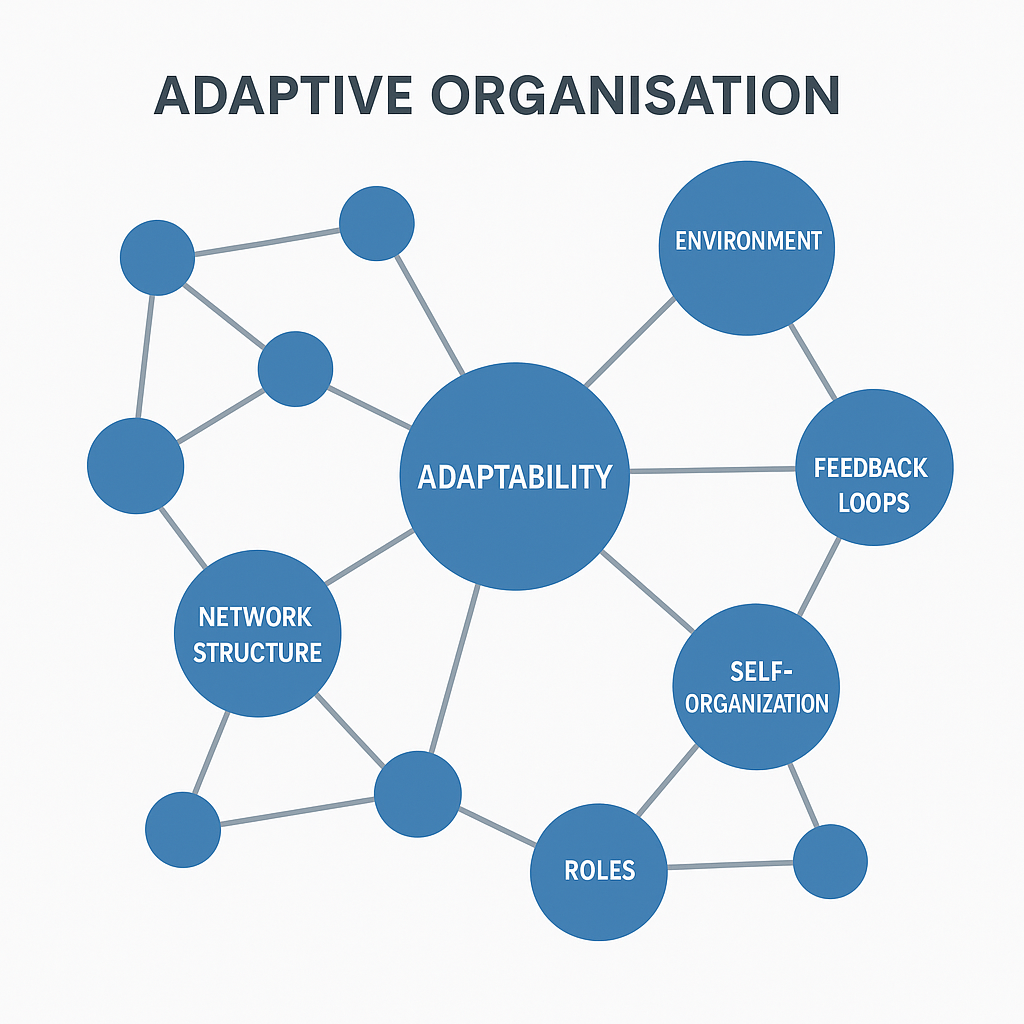
Eine adaptive Organisation definiert sich durch ihre Fähigkeit, unter Unsicherheit wirksame, dezentrale Entscheidungen zu treffen, kontinuierlich zu lernen und die heutigen Handlungen mit zukünftigen Chancen in Einklang zu bringen. Sie stützt sich auf Selbstorganisation, ergebnisorientierte Messung und Führung als fortlaufende Lernpraxis statt auf starre Strukturen oder Kontrolle. Insgesamt entsteht Adaptivität durch die bewusste Gestaltung von Entscheidungsfindung, Zusammenarbeit und Lernen, um Komplexität zu navigieren und kontinuierlichen Wandel zu ermöglichen.
Organisations today face a paradox: they must deliver value reliably today whilst simultaneously preparing for an uncertain tomorrow. This article explores why sound product management, combined with the structural shift to product orientation, is essential for building truly adaptive organisations. Learn how product management creates coherence, enables fast learning, and provides the strategic discipline needed to thrive in dynamic markets.
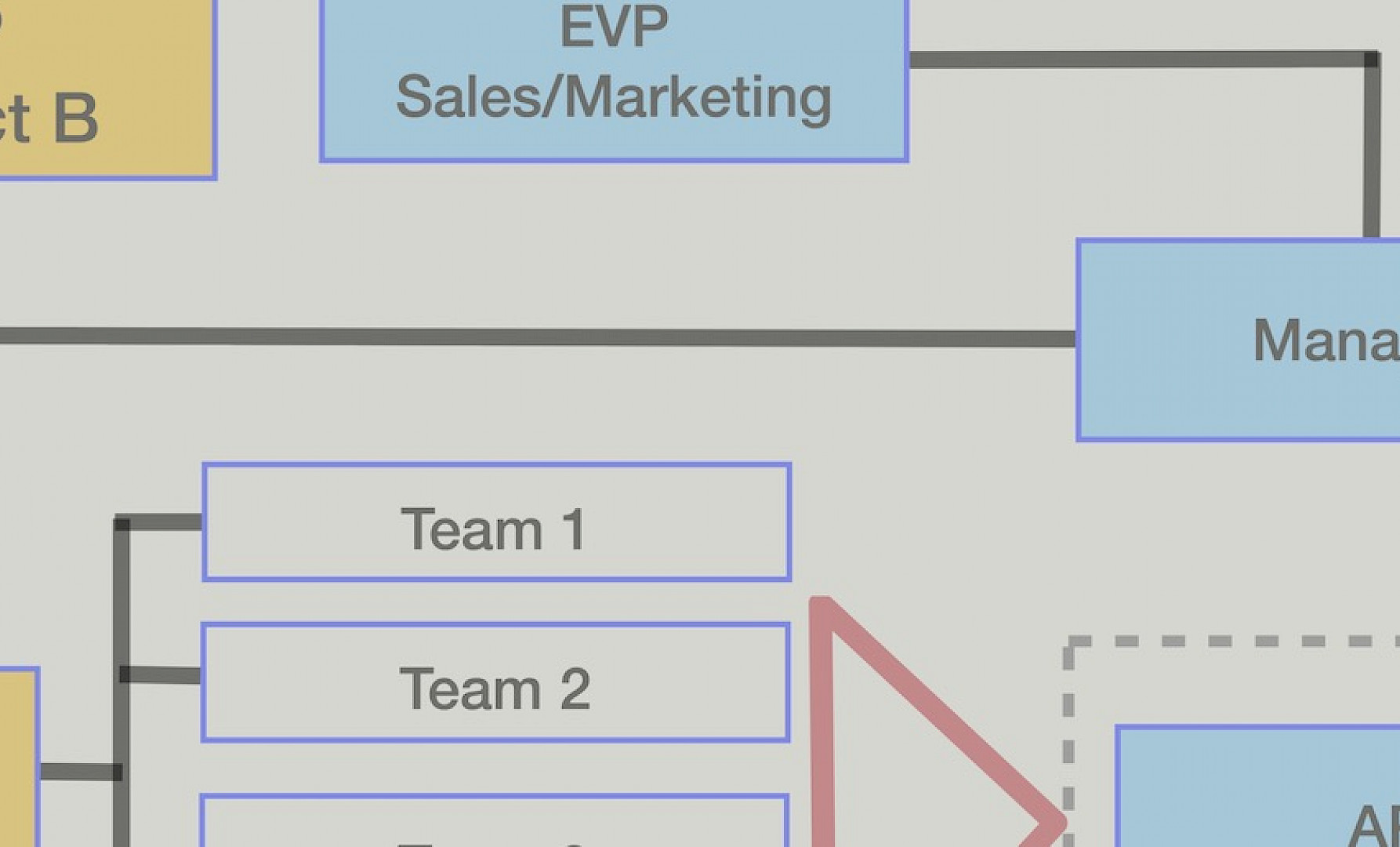
Matrix organisation has well-known problems. Combining Back-Front and Modular organisation designs gives you options for creating adaptive organisation, productive teamwork, and market focus.
In Zeiten von KI und Remote-Arbeit stellt sich die Frage, ob traditionelle Teams obsolet werden. Der Artikel prüft Hackmans fünf Bedingungen für wirksame Teams an Dynamic Teaming und KI: Teams bleiben relevant, aber nur unter Bedingungen.
Von: Andreas Schliep
Veröffentlicht:
Adaptive OrganisationenAgile PrinzipienTeamsKI in der Zusammenarbeit
This whitepaper examines how organisations can develop genuine adaptability in rapidly changing markets. Traditional functional structures fail when confronted by agile competitors. We identify three essential pillars: product orientation (organising around complete value streams), fast learning cycles (feedback loops measured in days, not quarters), and organisational ambidexterity (exploiting current capabilities whilst exploring new opportunities). Underpinning these is adaptive leadership that enables rather than directs. Organisations that commit to this transformation do not merely survive disruption but create it, generating new markets rather than defending eroding positions.
Der Artikel beleuchtet die Innen- und Außensicht der Überlebensfähigkeit von Organisationen. Eine mögliche Außenperspektive spiegelt sich in Börsenhandelsdaten - eine mögliche Innenperspektive ensteht aus dem Wissen, welches wir über die Organisation zu der wir gehören haben. Ein guter Gesprächseinstieg sind 4 Metaphern, die für Organisationen mit unterschiedlichem Grad von Adaptivität stehen.