Evolvability: the variable that actually matters
Evolvability: the variable that actually matters
Most conversations about adaptive organisations stall on the wrong word. We ask whether a company is adaptive — as if adaptiveness were a state you reach and then hold, like a target weight or a certification on the wall. But adaptiveness is a snapshot. It tells you how well an organisation fits its environment today. It says nothing about whether that fit will hold once the environment moves.
The variable worth tracking is not adaptiveness. It is evolvability: the capacity to keep generating useful change, cheaply and continuously, faster than the world around you shifts. Biology has worked with this idea since at least the late 1980s. Organisational design can borrow from it.
Ashby’s floor
Start with the one law no adaptive system escapes. W. Ross Ashby’s Law of Requisite Variety (1956) says that to regulate a system, your repertoire of responses must be at least as rich as the disturbances you face. In its compact form, measuring variety in bits:
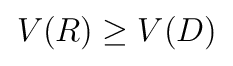
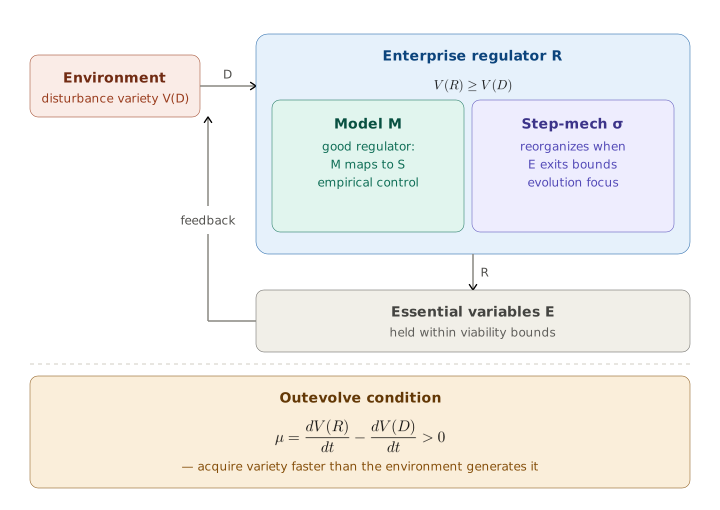
The regulator R can only absorb the disturbance variety V(D) if its own variety V(R) matches it. In Ashby’s words, only variety in the regulator can force down the variety due to the disturbances: variety can destroy variety. An organisation with five standard responses cannot survive a market that throws fifty distinct challenges. The shortfall does not disappear; it lands on your essential variables — cash, talent, trust, relevance — and pushes them towards the edge of viability.
This is the floor. Notice what it does not promise. Requisite variety buys you survival, not victory. Matching the environment is the price of staying in the game, not a strategy for winning it.
The rate turn
Ashby’s law is static. It describes a single moment. But environments are not static — and I assume that ours changes at an accelerating rate. AI is one driver I see; talent scarcity, regulatory load, and fragile supply chains are others. This is a working assumption, not a measured fact: I know of no agreed measure of how an environment’s variety develops over time. I mark below where the argument depends on it.
So the static inequality has to be differentiated. This step goes beyond Ashby and needs only that the environment changes at all. What you need is not a one-time match but a match that holds as both sides move:
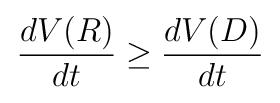
Your rate of acquiring variety must keep pace with the environment’s rate of generating it. In the AME3 framework I developed with Peter Beck, we call the strict version of this — acquiring variety faster than the environment — outevolve, and define a positive margin:
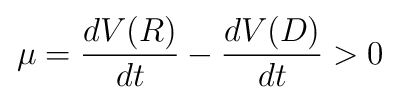
Since this is our own framing, it is worth being precise about why the margin matters. A positive μ contributes nothing to regulation right now: once your variety matches the disturbances, there is nothing left for extra variety to absorb. Its entire value is anticipatory. In an environment whose change is accelerating — where d²V(D)/dt² > 0 — a variety reserve built today is what keeps you viable when the curve steepens tomorrow. Outevolving is insurance against a future requisite-variety deficit, not a trophy for beating the field this quarter. Here the argument depends on the assumption above: if change is steady and not accelerating, a positive margin buys nothing that keeping pace would not.
What evolvability actually is
Here is where biology earns its place at the table. Evolvability is not the same as change, and it is not the same as variation. The term was in use before them (Dawkins 1989; Wagner and Altenberg 1996), but Kirschner and Gerhart (1998) gave it the definition I use here: the capacity to generate heritable, selectable phenotypic variation. Selectable is the word that matters: variation that selection can act on, not variation for its own sake.
Random thrashing has high variation and zero evolvability. A startup that pivots every fortnight is generating variety, but most of it is waste. What makes a biological lineage evolvable is, in Kirschner and Gerhart’s account, structural. Among the properties they name are compartmentation, which I render as modularity (components that can change independently without breaking the whole), weak linkage (parts coupled loosely enough that a change in one does not cascade catastrophically), redundancy (spare capacity that lets you experiment without betting the organism), and exploratory behaviour (mechanisms that generate options cheaply and let selection sort them). The glosses in brackets are my paraphrase.
Translate those into organisational terms — the translation is mine, by analogy — and you have a concrete design agenda:
- Modularity — teams and capabilities sliced so they can evolve without a company-wide rewrite. The inverse of the monolith where every change requires sign-off from everyone.
- Weak linkage — interfaces and contracts between units that contain the blast radius of any single experiment.
- Reserve capacity — slack that is not waste but the precondition for exploration. By this reasoning, an organisation running at 100% utilisation has an evolvability of roughly zero; it cannot try anything it is not already doing. That is an inference from the model, not a measurement.
- Cheap experiments — the organisational equivalent of low-cost mutation: the ability to run a probe, read the result, and keep or kill it without ceremony.
This is what raising dV(R)/dt looks like in practice. You are not exhorting people to “be more adaptive.” You are building the structures that make adaptive variation cheap.
The ceiling you cannot outrun
Evolvability has limits, and ignoring them is how ambitious organisations destroy themselves. Two constraints deserve naming.
The first is the good-regulator constraint. Conant and Ashby (1970) proved that every good regulator of a system must be a model of that system. I read this as: the quality of your control is bounded by the fidelity of your model M of your situation S.

The practical consequence: you cannot evolve faster than you can make sense of your own situation. Push reorganisation past the rate at which your model can track reality, and M stops matching S — your regulator is now steering by a map of a country that no longer exists. I see a parallel to what biology calls the error catastrophe (Eigen 1971): mutate too fast and you destroy the accumulated fitness you were trying to build on. Evolvability without sensemaking is not speed. It is thrashing with extra steps.
The second is the Red Queen. Van Valen’s (1973) hypothesis — named for the character in Through the Looking-Glass who runs flat out merely to stay in place — describes co-evolving competitors locked in an arms race. When your rivals are also raising their evolvability, the relative position barely moves while the cost of holding it climbs for everyone. This is my caution against reading “outevolve” as “beat the competition.” Against co-evolving rivals, sustained outpacing is rarely the equilibrium. What you mostly buy with a higher evolution rate is the right to keep standing where you are.
Reframing the goal
So the prize is not beating your competitors. The Red Queen says you mostly cannot, not durably. The real prize is viability: keeping your essential variables inside their survivable bounds as the environment accelerates underneath you. Evolvability is what lets you do that. Outevolving — the positive margin μ — is the reserve that keeps the bounds reachable when the curve steepens.
For those of us working on adaptive organisations, this points to a sharper agenda than the usual calls for agility and culture. Three commitments follow:
Measure rate, not state. Stop asking “are we adaptive?” and start asking “how fast can we generate and absorb useful change, and is that faster than our environment is moving?” The first question has a comfortable yes-or-no answer. The second is the one that keeps you alive.
Design for evolvability, not for adaptiveness. Adaptiveness is an outcome you cannot command directly. Evolvability is a structural property you can build — through modularity, weak linkage, reserve capacity, and cheap experiments. Build the capacity and the adaptations follow.
Respect the ceiling. Couple every increase in evolution rate to an increase in sensemaking. A faster organisation that cannot keep its model of reality current is not more adaptive; it is more dangerous to itself.
If you take the first commitment seriously, the next question is how to measure a rate of variety at all. I have no validated instrument for dV(R)/dt. As starting points I would track three proxies: how long it takes from recognising a new kind of demand to having a working response; how many experiments you conclude per quarter, and what each one costs; and what share of your capacity is not already committed to current work. None of these measures variety in Ashby’s sense. They indicate whether the structures described above exist. For the environment’s side, count how often you meet a disturbance for which you had no prepared response. If that count rises while your response time does not fall, your margin is negative, whatever the organisation believes about its own adaptiveness.
References
- Ashby, W. R. (1956). An Introduction to Cybernetics. Chapman & Hall. http://pespmc1.vub.ac.be/books/IntroCyb.pdf
- Beck, P., & Schliep, A. (2026). Outevolve: The Enterprise Operating Model for the Age of AI. https://ame3.ai/outevolve/
- Conant, R. C., & Ashby, W. R. (1970). Every good regulator of a system must be a model of that system. International Journal of Systems Science, 1(2), 89–97. https://doi.org/10.1080/00207727008920220
- Dawkins, R. (1989). The Evolution of Evolvability. In C. G. Langton (ed.), Artificial Life, pp. 201–220. Addison-Wesley.
- Eigen, M. (1971). Selforganization of matter and the evolution of biological macromolecules. Die Naturwissenschaften, 58(10), 465–523. https://doi.org/10.1007/BF00623322
- Kirschner, M., & Gerhart, J. (1998). Evolvability. Proceedings of the National Academy of Sciences, 95(15), 8420–8427. https://doi.org/10.1073/pnas.95.15.8420
- Van Valen, L. (1973). A new evolutionary law. Evolutionary Theory, 1, 1–30.
- Wagner, G. P., & Altenberg, L. (1996). Complex adaptations and the evolution of evolvability. Evolution, 50(3), 967–976. https://doi.org/10.1111/j.1558-5646.1996.tb02339.x
Further reading on organisational evolution:
- March, J. G. (1991). Exploration and Exploitation in Organizational Learning. Organization Science, 2(1), 71–87. https://doi.org/10.1287/orsc.2.1.71
- Nelson, R. R., & Winter, S. G. (1982). An Evolutionary Theory of Economic Change. Harvard University Press.
Revision note
Revised 9 October 2026 (first published 29 June 2026), following an editorial review:
- The AME3 framework and the outevolve concept are my own work with Peter Beck; this is now stated in the text.
- The premise that change is accelerating is marked as a working assumption, and the text says where the argument depends on it.
- Kirschner and Gerhart did not coin the term evolvability, and their definition speaks of selectable, not adaptive, variation. Both are corrected, and their own terms for the structural properties are given.
- Ashby’s phrase is quoted as he wrote it.
- Inferences and analogies of mine are marked as such.
- The closing paragraph was replaced, and a full reference list was added.
AI assistance: this revision was prepared with the help of an AI assistant (Claude, Anthropic), which checked the sources and drafted the changes. I reviewed the result and am responsible for its content.